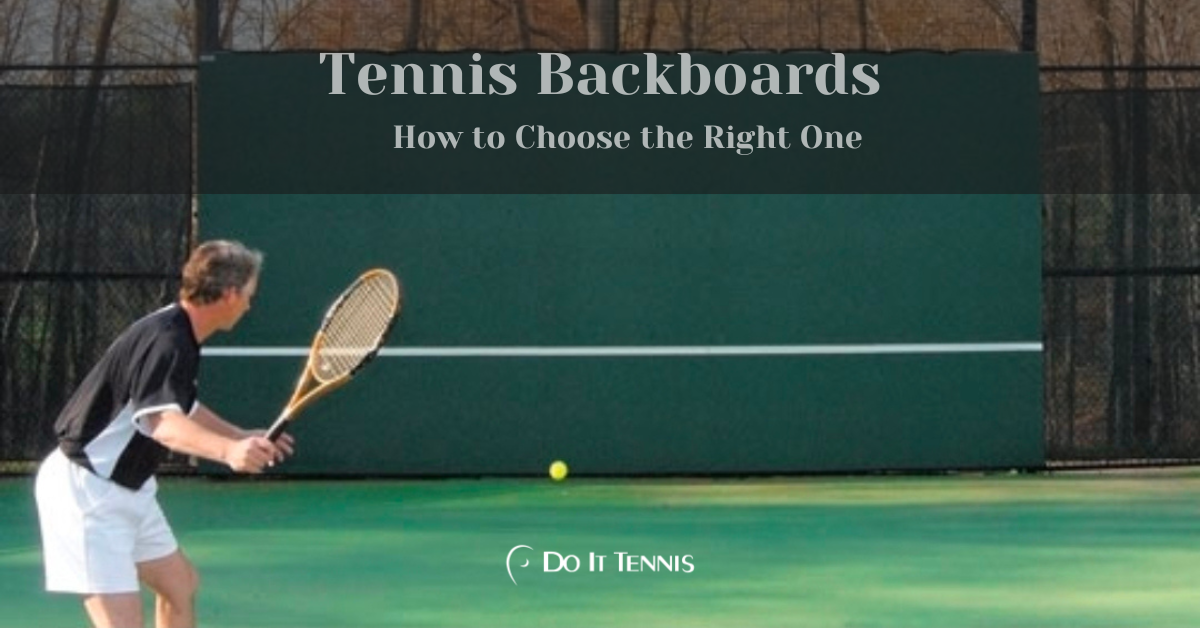
Tennis Backboards: How to Choose the Right One
If you manage a tennis club, a public recreation center, or a municipal park with courts, you already know the challenge: members and players want to practice on their own schedule, and you can't always have an instructor or hitting partner available. A tennis backboard solves that problem quietly, durably, and permanently.
Unlike residential court installations, a backboard added to an existing club or park facility is a low-footprint, high-impact upgrade. It turns unused fence space into a 24/7 training station, no additional staff required. But the type of backboard you choose matters. Flat, sloped, single-curved, or dual-curved each produce a different ball return experience, suit different player populations, and come with their own installation and maintenance considerations.
This guide walks you through everything a club manager or facility owner needs to know before purchasing, from the numbers that justify the investment to a full breakdown of every backboard type available at Do It Tennis.
Why a Backboard Is a Smart Facility Investment
The case for adding a backboard to your facility starts with one number: a player hitting on a backboard can strike up to 1,800 balls in a single hour. Compare that to roughly 650 on a ball machine, or just 150 during a typical hour of match play. That kind of repetition is what builds consistent groundstrokes, and your members can get it any time, before a lesson, after work, or on a weekend morning, without taking up a full court.
From a facility management standpoint, the benefits are just as clear:
• It increases perceived value of your facility without requiring additional court space
• Keeps players engaged and on-site when courts are occupied or partners aren't available
• Requires no staffing — a backboard is always ready
• Flat models work for multiple sports, making them useful for multi-use recreational parks (soccer, basketball, lacrosse)
• Modern backboards are built for outdoor durability with minimal maintenance
• A quality backboard is a long-term asset — most carry warranties of 10 to 20 years
📊 By the Numbers: In one hour of backboard practice, a player can hit 1,800 balls — 12 times more than in an average hour of match play. That's a training return your members will notice immediately.
What to Look for in Construction and Materials
Before choosing a shape or style, facility managers should understand what backboards are made of because material quality directly affects durability, noise levels, maintenance burden, and warranty coverage.
Avoid wood and brick backboards entirely. Older installations built from standard lumber or masonry warp with moisture, crack under heat, chip after extended use, and cause unpredictable ball deflection over time. They also require ongoing maintenance and repainting that adds up quickly for a busy facility.
Do It Tennis carries three brands, each using superior modern materials:
Bakko — Dense Fiberglass
Bakko has been manufacturing backboards for over 50 years. Their panels are constructed from dense fiberglass coated with UV-resistant Imron paint, the same grade used on aircraft and automobiles. Each panel is divided into 20 sub-compartments filled with sound-deadening material, making them notably quieter than bare wood or brick alternatives. Panels interlock for a seamless wall and attach directly to existing fence posts. Bakko carries a 10-year pro-rated structural warranty and a 1-year paint warranty.
Rally Master — Solid UV-Stabilized Plastic
Rally Master panels are solid-core dense plastic with the color molded directly in, there is no exterior paint to fade or peel, which significantly reduces long-term maintenance. Patent-pending vibration dampeners make these among the quietest backboards available; measured decibel readings show ball impact is no louder than a racket strike. Rally Master backboards come with an industry-leading 20-year warranty and are tested and covered for tennis, soccer, lacrosse, and basketball, making them ideal for multi-sport municipal parks. They also feature permanently etched net lines.
REAListic by Good & Associates — Weatherproof Wood Composite
REAListic backboards are handcrafted from Douglas Fir framing with a high-quality weatherproof overlay, primed and painted for outdoor resilience. They are the only manufacturer producing tilted and dual-curved backboards, designs that produce match-realistic ball return. Standard Straight-Tilt models include basic sound reduction with 15% noise absorption; the Dual-Curved model includes an upgraded insulation kit for up to 35% noise reduction. Each unit is custom-made to order (not pre-manufactured), with a 2-year structural warranty.
🌴 Climate Note: Facilities in coastal or high-humidity environments (such as Florida, Guam, or Hawaii) should expect faster paint oxidation regardless of brand. Bakko can supply galvanized or stainless hardware for tropical installations, and REAListic recommends an annual touch-up with a full repaint every two years.
The Four Types of Tennis Backboards — What Clubs Need to Know
Shape is the single biggest factor in how your members experience the backboard. Here is a full breakdown of each type, with honest pros and cons from a facility perspective.
1. Flat Backboards
Flat backboards are the classic, vertical hitting surface — no tilt, no curve. The ball returns fast and low, bouncing almost directly back toward the player at a downward angle. This is the most common type found at country clubs, resorts, and multi-sport parks. Bakko and Rally Master both offer extensive flat model lineups.
Best suited for:
• Multi-sport recreational parks where the backboard will also be used for soccer, basketball, or lacrosse
• Facilities with a large beginner or junior membership base
• Clubs that want a simple, low-maintenance installation at the lowest price point
• Sites with budget constraints or phased equipment rollouts
Pros:
• Most affordable backboard type
• Straightforward installation against existing fence posts
• Versatile — sanctioned for multiple sports by Rally Master warranty
• Available in the widest range of sizes (from 8'x12' up to unlimited panel configurations)
• Bakko's Professional Flat panels feature a robust metal interior frame with 20 sound-deadening sub-compartments
• Rally Master Flat Series carries a 20-year warranty — the best in the industry
Cons:
• Ball returns at an unrealistic downward angle — doesn't simulate actual rally dynamics
• Players must stand close to the board, reducing swing preparation time
• Balls frequently roll along the ground on return, interrupting practice flow
• Intermediate and advanced players may find the practice feel unsatisfying over time
🎾 Facility Verdict: Flat backboards are the right call for multi-purpose recreational parks or facilities with a predominantly beginner membership. If your club hosts competitive players or junior programs focused on development, a sloped or curved model will serve them better.
2. Sloped (Straight-Tilt) Backboards
Sloped backboards are built with an upward tilt — typically 15 degrees — that fundamentally changes the return trajectory. Instead of bouncing back low at the player's feet, the ball comes back with arc, rising to a comfortable contact height that closely resembles a real baseline rally exchange. The REAListic Straight-Tilt and Rally Master tilted models lead this category.
Best suited for:
• Club facilities with intermediate to advanced player populations
• Junior academies and training programs
• Facilities where realistic groundstroke practice is a priority
• Clubs adding a secondary backboard to complement an existing flat installation
Pros:
• Ball returns with arc, simulating real baseline rally conditions
• Players naturally position themselves further from the board — more realistic footwork and swing prep
• Balls bounce up rather than rolling along the ground, maintaining practice flow
• The REAListic 8'x12' Straight-Tilt fits on a driveway-sized footprint — roughly 1/10th the space of a full court
• REAListic includes basic sound reduction (15% noise absorption) in all Straight-Tilt systems
Cons:
• Higher cost than flat backboards
• Ball still returns in a straight line — no lateral variation between shots
• REAListic models are handcrafted to order with 8–10 week lead time — plan purchases well in advance
• Not warranted for multi-sport use (unlike Rally Master flat panels)
🎾 Facility Verdict: Sloped backboards are the most popular upgrade choice for tennis-specific clubs. They offer a meaningful leap in practice quality over flat models without the premium price of a curved installation — a strong value proposition for facilities serving a mixed intermediate and advanced membership.
3. Single-Curved Backboards
Single-curved backboards arc gently outward from side to side. Bakko's Single Curved Series is the key option in this category. The curvature produces two meaningful changes to ball return: shots come back at a higher trajectory than a flat board, and off-center hits redirect back toward the center of the board — keeping rallies going longer and reducing the time players spend chasing errant balls.
Best suited for:
• Clubs that want an engaging, high-rally-rate training experience
• Facilities looking for a premium feel without the full cost of a dual-curved model
• Net game and volley-focused training programs
Pros:
• Ball returns higher than flat boards — creates more opportunity for sustained volleys
• Self-correcting: off-center shots curve back to center, maximizing practice reps per session
• Built with Bakko's proven dense fiberglass and UV-resistant Imron paint
• 10-year pro-rated structural warranty
Cons:
• Returns ball at a consistent height — no variation based on where you strike the surface
• Less match-realistic than a tilted or dual-curved design
• Higher price than flat options
• Not designed for multi-sport use
🎾 Facility Verdict: Single-curved boards are an excellent mid-tier option for clubs that want to offer something more engaging than a flat board, particularly for net game development and extended rally practice. A good choice for clubs that run frequent clinics or junior programs.
4. Dual-Curved Backboards (REAListic)
The dual-curved design is the most advanced backboard available and REAListic is the only manufacturer that produces it. The REAListic Dual-Curved Backboard is simultaneously curved side to side and tilted upward, creating a response surface that interacts with your members' shots in a way no other backboard can match.
The mechanics are what set it apart: hit low and the ball returns high; hit high and it comes back low. Strike the ball to the left panel and it redirects to your right. This variable, dynamic return closely mirrors what a player would receive from an opponent on the other side of the net — and it's the only backboard with an arc geometry that allows players to practice serve-and-volley combinations entirely on their own.
Best suited for:
• Premium tennis clubs with competitive or advanced membership bases
• Junior academies with structured development programs
• Facilities investing in a flagship training installation
• Clubs that want to offer a genuinely differentiated member benefit
Pros:
• The most match-realistic ball return of any backboard type on the market
• Variable return height and lateral redirection — simulates an actual hitting partner
• Containment curvature keeps off-center balls funneling back into play — extended rally points
• The only backboard design that supports solo serve-and-volley practice
• Includes Deluxe Sound Reduction Kit — 35% noise reduction, important for residential-adjacent clubs
• Optional 3-foot containment net available to prevent balls from exiting the practice zone
Cons:
• Lead time of 12–14 weeks — production is handcrafted and custom to order
• Ships via freight; curbside delivery only — facility must arrange offloading and installation
• Requires annual touch-up and full repaint every two years for best longevity
• 2-year structural warranty is shorter than Bakko or Rally Master offerings
🎾 Facility Verdict: If your club serves competitive players, runs junior development programs, or simply wants to offer the best possible solo training experience, the REAListic Dual-Curved is the clear answer. It is a premium investment, but one that meaningfully differentiates your facility from others that offer only a basic flat board.
Choosing the Right Backboard for Your Facility
Here's a practical decision framework based on facility type and membership profile:
Municipal parks and multi-sport recreation centers:
Go flat. Rally Master's 20-year warranty covers soccer, basketball, and lacrosse use — exactly what a multi-sport park needs. Budget-friendly, low-maintenance, and durable enough for heavy public use.
Country clubs and resort facilities with mixed membership:
A flat Bakko Professional or Rally Master model works well as a base installation. Consider pairing with a sloped REAListic Straight-Tilt to offer both options — a simpler board for warm-up and juniors, and a more realistic one for intermediate and advanced players.
Tennis-specific clubs and junior academies:
A sloped or dual-curved backboard will serve your membership far better than a flat model. The REAListic Straight-Tilt is a strong value option; the REAListic Dual-Curved is the premium choice for competitive programs. Budget permitting, both together create an exceptional practice environment.
Facilities on a tight budget:
Start with a Bakko Economy Flat Series. It uses the same outer fiberglass and Imron paint shell as the Professional line, at a lower price point. It's a solid entry point that can be expanded panel-by-panel as your budget grows.
Ready to Equip Your Facility?
Browse the complete selection of tennis backboards at Do It Tennis — flat, sloped, single-curved, and dual-curved models from Bakko, Rally Master, and REAListic — at doittennis.com/tennis-backboards. Our team is made up of tennis players who understand both the sport and the practical demands of running a facility. Call us at 1 (866) 900-3648 or email customerservice@doittennis.com, we're happy to help you find the right fit for your courts, your members, and your budget.
A backboard is one of the few facility upgrades that pays for itself in member satisfaction every single day. No scheduling, no staffing, no court reservation required. Choose the right one, and you've added the most reliable practice partner your members will ever have.
Join the conversation: LinkedIn | Facebook | Instagram | Reddit | Threads.