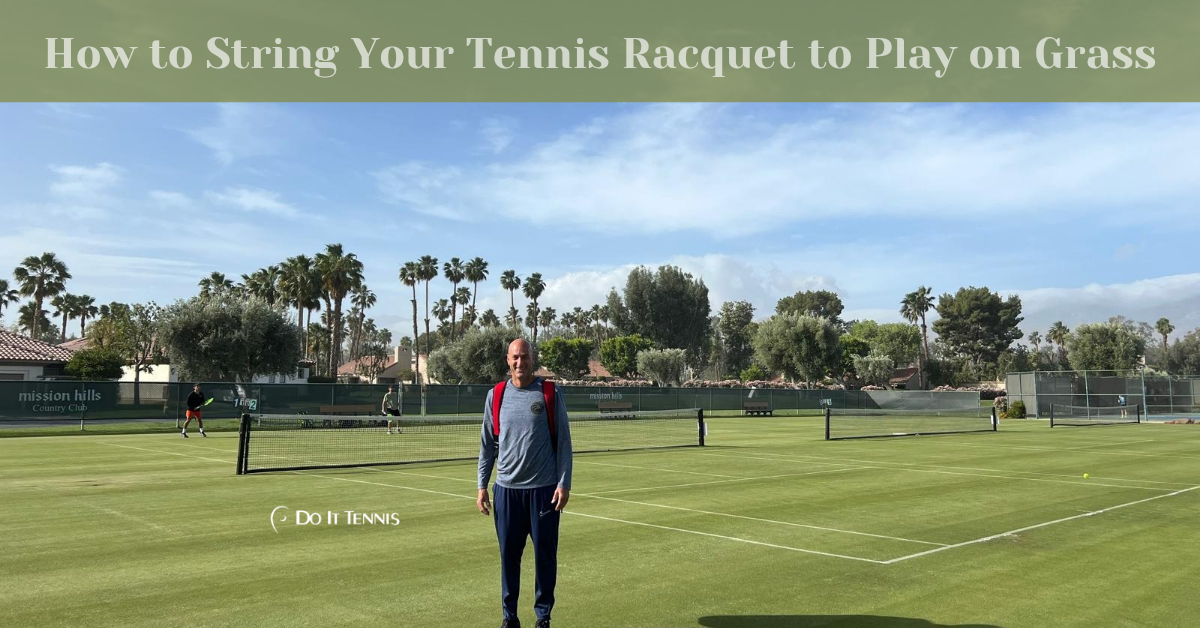
How to String Your Tennis Racquet to Play on Grass
Grass courts play differently than any other surface in tennis, and that difference should show up in how you string your racquet. The ball moves faster, the bounce sits lower, and points are typically shorter. Here is how to think through your string setup for grass, and how it compares to clay and hard-court stringing.
How Grass Changes the Game
Grass produces a low, fast, skidding bounce rather than the higher, slower bounce you get on clay. There is less time to react, less margin once the ball passes you, and shots often come from a lower contact point. That combination is exactly why grass has historically been treated as a control surface when it comes to stringing decisions.
Tension: The Traditional Case for Stringing Higher
The classic stringing logic for grass points toward higher tension. A firmer, tighter string bed flexes less on contact, which keeps the ball on a shorter, more predictable path. On a fast surface where shots can skid through and get away from you quickly, that extra precision has real value. This is the same reason higher tension is generally recommended for players who want more control: less string movement at contact means a more direct, consistent response.
Lower tension works in the opposite direction. A looser string bed flexes more at contact, increasing power and depth and adding a bit more comfort, but at some cost to precision. On a surface that already moves fast and gives you less time to compensate for a mishit, trading away control is a real tradeoff, not just a feel preference.
That said, stringing practice has shifted in recent years. Many players now string relatively low even on grass, accepting a slightly less locked in response in exchange for a bigger sweet spot, more spin potential, and a softer, more comfortable feel. So, while the traditional and still defensible approach favors stringing a touch tighter for grass, it is not the only approach in use at the highest levels of the sport.
A reasonable starting point: if you already have a tension you trust on hard courts, stay at that number or move slightly higher for grass rather than dropping it. If you find yourself overhitting or struggling to keep shots in play on the quick bounce, going up a pound or two is going to be effective.
String Type: Favor Feel and Touch
Tension is only half the equation. String material also shapes how a racquet performs on grass.
Natural gut is a longtime favorite for grass because it holds tension exceptionally well and stays comfortable and lively across a wide tension range. That matters on a surface where you may want to lean toward the firmer end of your tension range without sacrificing feel and comfort, since gut tends to feel good even at higher numbers where stiffer strings start to feel harsh.
Multifilament strings offer a similar benefit. They are inherently soft and forgiving, so they tend to tolerate higher tension more comfortably than polyester does, which makes them a sensible choice if you are stringing up for grass and want to protect your arm at the same time. This is, if you don't break multifilament strings too easily.
Polyester strings still work on grass, especially for players who already rely on poly for control and durability. Because polyester is naturally stiff, it is usually strung lower than gut or multifilament to begin with, regardless of surface, so if you are a full poly player heading into grass season, a small bump up from your normal poly tension is more realistic and effective.
A hybrid setup, often gut or multifilament in the mains paired with polyester in the crosses, is a common middle ground. It lets you keep some of the control and durability benefits of poly while leaning on the comfort and feel of a softer cross string.
String Gauge
Thinner gauges, such as 16L or 17, offer more feel and a slightly softer response, which can help on a surface that already rewards touch around the net and on low balls. If string breakage is a concern, keep your regular gauge and adjust the other elements (e.g. tension and string type).
Grass vs Clay vs Hard Court: A Quick Comparison
- Clay: Favors spin friendly polyester setups. The ball sits up higher and rallies run longer, so many players lean toward the lower end of their tension range to maximize spin and depth.
- Hard court: Often treated as a durability surface. The abrasive court wears strings down quickly, so full polyester beds are common, typically strung in a moderate range.
- Grass: Traditionally treated as a control surface. The low, fast bounce rewards a firmer string bed, which is why higher tension has long been the conventional recommendation, even as more players today experiment with lower tension for added spin and comfort.
Bottom Line
If you are stringing up for grass season, the traditional and still well supported approach is to string at or slightly above your usual tension, not below it, since the surface rewards control more than spin. Pairing that tension with a comfortable string like natural gut, multifilament, or a gut and poly hybrid helps you get that control without sacrificing feel or arm comfort. If you can, going for a lower gauge can also help you with feel and touch. From there, personal experimentation is always the best way to dial in a setup that matches your own game.
Looking to restring before your next tournament? Do It Tennis offers a wide selection of racquets, strings, shoes, and accessories with fast processing and free shipping.
Want to stay up to date? Join the conversation:
LinkedIn | Facebook | Instagram | Reddit | Threads.